



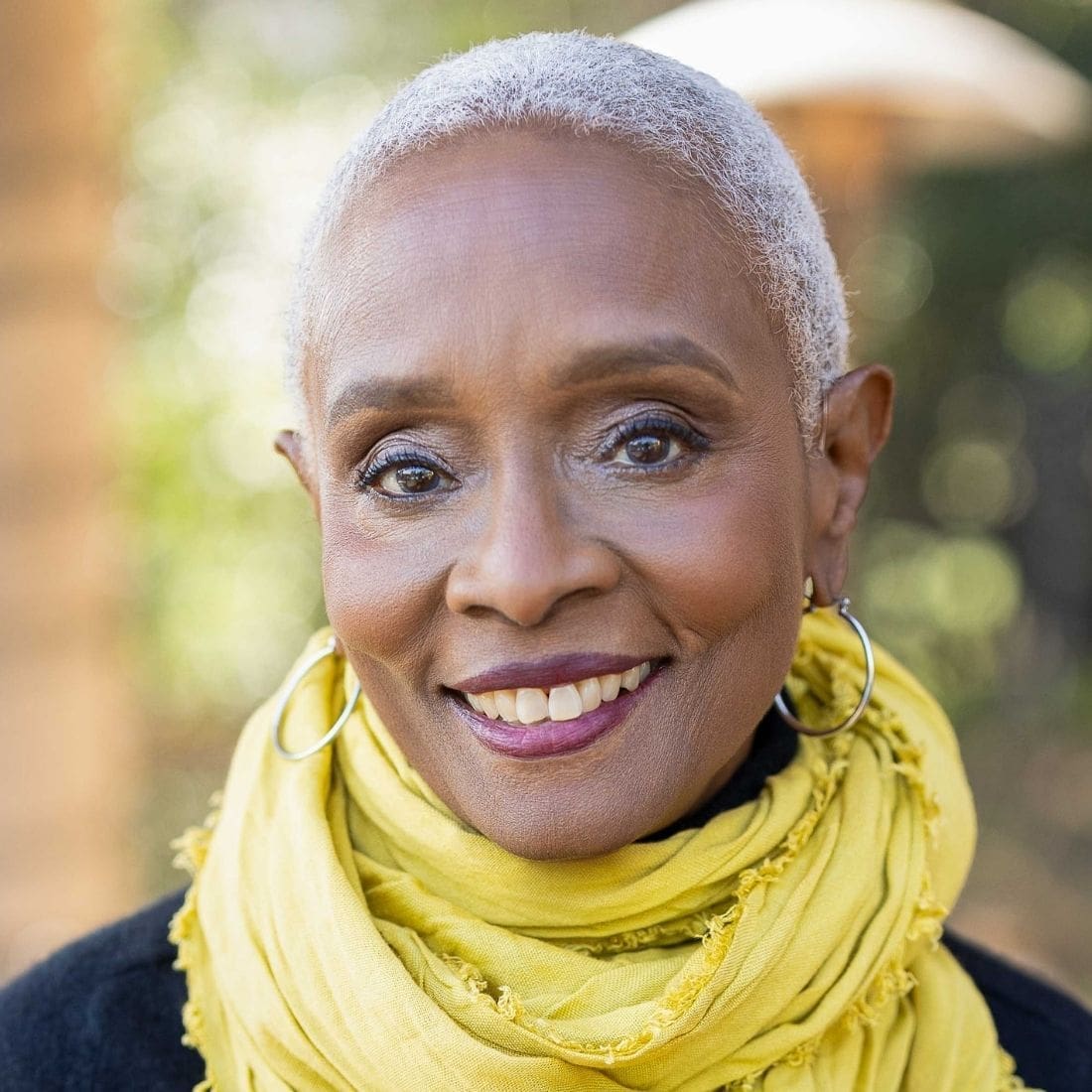
The Woman Reimagining Wealth and Ownership
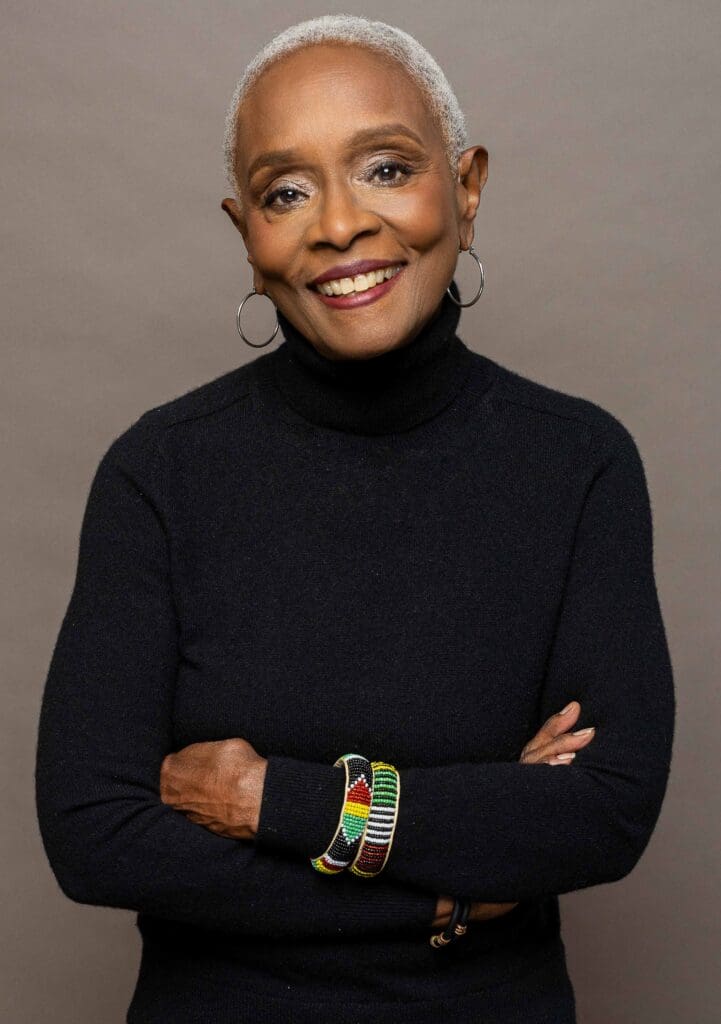
Her work is rooted in a powerful understanding that land, ownership, and economic opportunity are essential to freedom. Inspired by the experiences of her ancestors and driven by a commitment to future generations, she has dedicated her career to building systems that support Black farmers, entrepreneurs, and communities. We sat down with her to discuss leadership, legacy, and the transformative power of collective action.
Your work sits at the intersection of agriculture, economic justice, and Black liberation. What inspired your commitment to using land ownership and cooperative economics as tools for long-term community empowerment?
It begins with my ancestors, the most recent being my grandfather, Charlie Mason. In the 1920s, he was a successful Black farmer and entrepreneur in Alabama. His success drew the racist violent attention of the Ku Klux Klan, forcing my family—my infant father in tow—to flee, leaving behind the farm and general store they had built. Like so many other southern Black families, they migrated to California as part of the Great Migration, where I was later born.
Agriculture remained central in my family. My father worked in the agricultural business, and my maternal grandparents had a small farm in Riverside, California. Some of my earliest memories are rooted there—growing and eating fresh vegetables, tending the land with my grandparents, and grappling with the realities of raising and slaughtering animals, which led me to become a vegetarian in 1975, which I still am today.
The loss of my family’s land has shaped my life’s work. It taught me that land is not just property—it is power, stability, self-determination and the key to generational wealth building. I agree with Malcolm X when he stated:
“Revolution is based on land. Land is the basis of all independence. Land is the basis of freedom, justice, and equality.”
In the 1920s Black people owned 20 million acres of farmland and were 14% of all U.S. farmers representing nearly 1 million farmers. Today, Black farmers make up just 1.3% to 1.5% of the nation’s agricultural producers and are down to 2 million acres of land, a catastrophic decline driven by decades of systemic discrimination, predatory lending, and discriminatory USDA policies.
When Black communities lose land, we lose the foundation for real equity, building wealth, sovereignty and a sense of place.
That understanding has led me to cooperative economics. Our ancestors survived by building mutual aid societies and cooperatives, knowing our strength is collective. At Jubilee Justice, we are a cooperative of Black American farmers located in several southern states and African farmers in Minnesota who are reclaiming rice as our African foodways and growing specialty rice in a climate resilient method. We share in every part of the process, from planting to milling to selling our crops. No one really achieves success alone. I believe creating a cooperative vertically integrated business model is a pathway to resilient, sovereign communities that can shape their own food systems and ignite community economics for generations.
In contrast, the dominant model of hyper-individualistic, racial capitalism is rooted in extraction, separation and harm—to people and to the planet. My work is grounded in creating something different: systems rooted in shared ownership, care, and regeneration—where all communities and the Earth can truly thrive.
Through Jubilee Justice and Potlikker Capital, you are helping redefine what reparative and equitable investing can look like. What changes do you believe are necessary within traditional financial systems to truly close the racial wealth gap?
First, we should be clear—we are not talking about a simple “gap.” We are talking about a chasm. The racial wealth divide is so vast that if white wealth froze today, it would still take Black people over two centuries to catch up. This is a fact. This disparity is not accidental; it is the foundation this country was built on and is embedded in the very fabric of our financial system and all of our institutions. And the message today is loud and clear as we are confronted with recent Supreme Court decisions stripping away the Voting Rights Act and the jerrymandering of Black representation. Land, wealth, representation are all interconnected.
Because of that, closing the racial wealth gap requires more than incremental change—it demands a fundamental redesign. Our current system is rooted in extraction: maximizing profit at any cost, exploiting both people and the planet. This model is not only unjust; it is unsustainable.
What’s needed is a shift in worldview—from extraction to reciprocity, from domination to relationship. Indigenous ways of knowing remind us that we are not separate from the Earth or each other. The same mindset that exploits land also exploits people. To repair one, we must repair both.
And while the scale of harm is immense, it is far from a hopeless situation. Our economic system was created by people—and it can be reimagined by people. That reimagining must be grounded in care, and a recognition of what is truly sacred—our communities, our ecosystems, and our shared future. It must recognize that all life is deeply interconnected. The financial system does not exist in a vacuum. Decisions we make in finance effect our entire lives.
Practically, this means transforming finance: moving capital in ways that prioritize repair and regeneration. Building “right” relationships with each other and the natural world are pivotal. It means patient, flexible investments in Black-led enterprises, valuing community and environmental impact on the same level as financial return, and dismantling biased risk models and short-term high interest, extractive lending practices.
At Potlikker Capital, my business partner, Mark Watson—President of the fund and a deeply experienced, mission-driven finance leader—and I are working to embody this shift by moving capital out of extractive systems and into regenerative relationships with BIPOC farmers and food producers. We are part of a growing movement to align capital with justice and regeneration. However, we are the only BIPOC-led fund with a mandate to support BIPOC farmers and food producers nationally with an integrated capital model that addresses not only financial capital, but social and well being capital as well in the form of technical assistance and geographically localized communities of practice.
You helped establish the first cooperatively Black farmer-owned rice, corn, and wheat mill in the United States. What did that milestone represent to you personally, and what impact do you hope it has on future generations of Black farmers and entrepreneurs?
That milestone was deeply personal—it represented the realization of a long-held vision for Black agricultural self-determination, cooperative economics, and economic sovereignty.
For generations, Black farmers have been producers without control over processing and distribution—the places where value is created and retained. Mostly, Black farmers are beholding to white-owned processing facilities that control what happens or doesn’t happen to your harvested crop. Establishing a cooperatively farmer-owned mill begins to change that equation.
The Jubilee Justice Specialty Food & Grain Cooperative owns a rice, corn and wheat mill located in Louisiana where we package and sell our specialty crops that are mostly USDA Certified Organic. We specialize in healthy pigmented black, red and other whole grain rice, as well as heirloom corn and wheat. We are expanding this year and opening a cafe, tortilleria and farm stop on the property where the mill is located.
It is my hope that our cooperative serves as a powerful proof point for future generations—that Black farmer–owned infrastructure is not only possible, but necessary. My hope is that it demonstrates what is possible when we unite, inspires new models of ownership, and helps build a more just and resilient food system where Black farmers and entrepreneurs can truly thrive together.
In addition to your activism and entrepreneurship, you are also a mindfulness teacher. How has mindfulness influenced your leadership style, decision-making, and ability to sustain yourself while doing transformational work?
Mindfulness is the bedrock of my leadership and how I move through the world. It allows me to fully commit to the transformational work that is mine to do, while letting go of attachment to outcomes. I work hard with diligence, compassion, and presence, knowing that the results are not entirely in my hands.
That ability to push for and yet release outcomes is what sustains me over the long arc of movement building. It keeps me from burning out or tying myself in knots, especially when change feels slow or uncertain. I navigate with the knowledge that life comes with as many joys as it does sorrows and having the ability to not take things so personally is very helpful to keeping a balanced mind.
Mindfulness also shapes how I lead and make decisions. It helps me pause and respond rather than react—particularly under pressure—so my choices are more often grounded in clarity rather than fear.
I am far from perfect and experience anger and despair like we all do. When the Supreme Court delivered what I believe to be an outrageous decision to roll back the Voting Rights Act, I immediately felt extreme anger and disgust. But my practice gives me the awareness to recognize those reactions sooner, sit with them, and return to a more skillful response. Instead of allowing my anger to show up in harmful ways, I use it to motivate me! That ongoing process is what allows me to stay engaged, steady, and committed to the work over time. I also remind myself that 400 years of harm will not be reversed in my lifetime. So I am able to internally pace myself while I advocate for a just world.
Your career reflects a powerful blend of purpose, innovation, and service. As you continue building spaces centered on justice, sustainability, and collective healing, what legacy do you hope your work leaves behind for Black communities and the next generation of changemakers?
More than anything, I hope my life reflects a deep commitment to integrity—living in alignment with my values and with the truth that all life is interconnected. From that understanding comes a responsibility: to be good stewards of the Earth and of one another. It is important that we extend our circles of care to beyond ourselves and our families but to the wider global community.
As Martin Luther King Jr. reminded us,
“In a real sense, all life is inter-related….we are all caught in an inescapable network of mutuality, tied in a single garment of destiny….Whatever affects one directly, affects all indirectly…This is the inter-related structure of reality”
That truth has guided my life and work.
I hope my legacy shows not only the importance of that understanding, but how to live it—through courageous collaboration, shared ownership, and a commitment to building regenerative systems rooted in compassion, justice, and equity.
I also hope to inspire the next generations about the importance of honoring and listening to our ancestors. Like the Sankofa bird, with their feet planted forward but their heads turned backwards to bring the hard earned lessons from the past into a newly reimagined future. We must always remember and tell the truth about the past…particularly the institution of American chattel slavery. Not to dwell, but to know it and be mindful of patterns, in order to avoid them and to help others.
Ultimately, I hope to leave behind a pathway—one that helps future generations move from awareness to action, and to measure success by how well we advance the healing, dignity, and liberation of all living beings and Black communities in particular.
As Fannie Lou Hamer reminds us:
“None of us are free until all of us are free”
And the rallying cry of Delores Huerta:
Sí se puede! Yes we can!
Learn more at: www.jubileejustice.com




Be the first to comment